
What is a flange and what size do I need?
The plastic triangle part that fits over your breast during a pump is called a flange. Until recently, there was little research on how the fit of a flange impacts comfort and milk output. Traditionally, manufacturers advised using a flange size based on the diameter of your nipple plus up to 5mm. However, for many parents, this recommendation hasn’t worked well. Pumping sessions often felt uncomfortable, took too long, and resulted in lower milk yields.

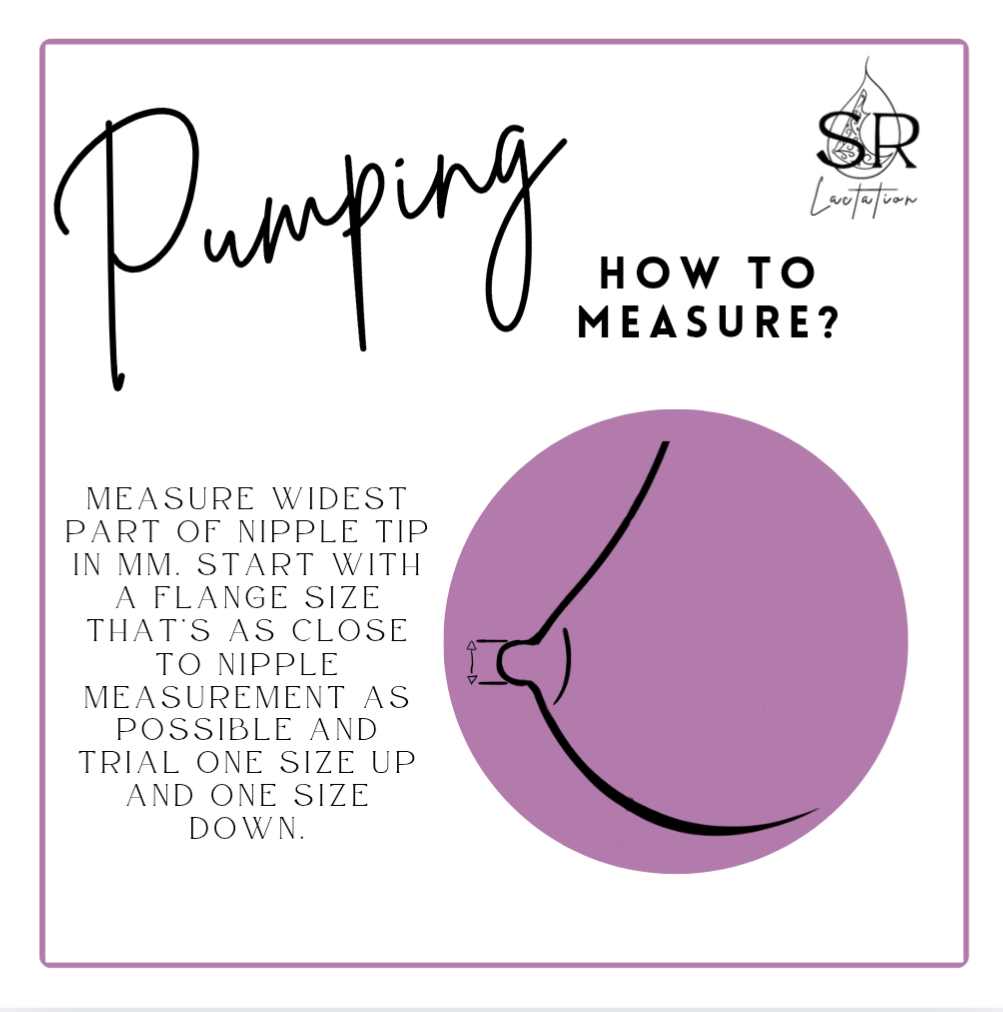
Experienced lactation professionals have long suspected that a better approach is to size flanges closer to the actual diameter of the nipple. And now we have some research to back that theory! A recent study titled ‘Flange Size Matters: A comparative Pilot study of the Flanges FITS Guide versus traditional sizing methods‘ found that using a flange size closely matching the parent’s nipple tip diameter not only improved milk output but also significantly increased comfort.
Interestingly, while most manufacturers include a 24-27mm flange as the standard size, the study revealed that many parents had more success, and more comfort with smaller sizes, such as 15mm and 17mm (which closely correlated with their actual nipple size). This highlights an important truth: a good fit isn’t just about mechanics – it’s also about comfort and being able to get that oxytocin flowing.
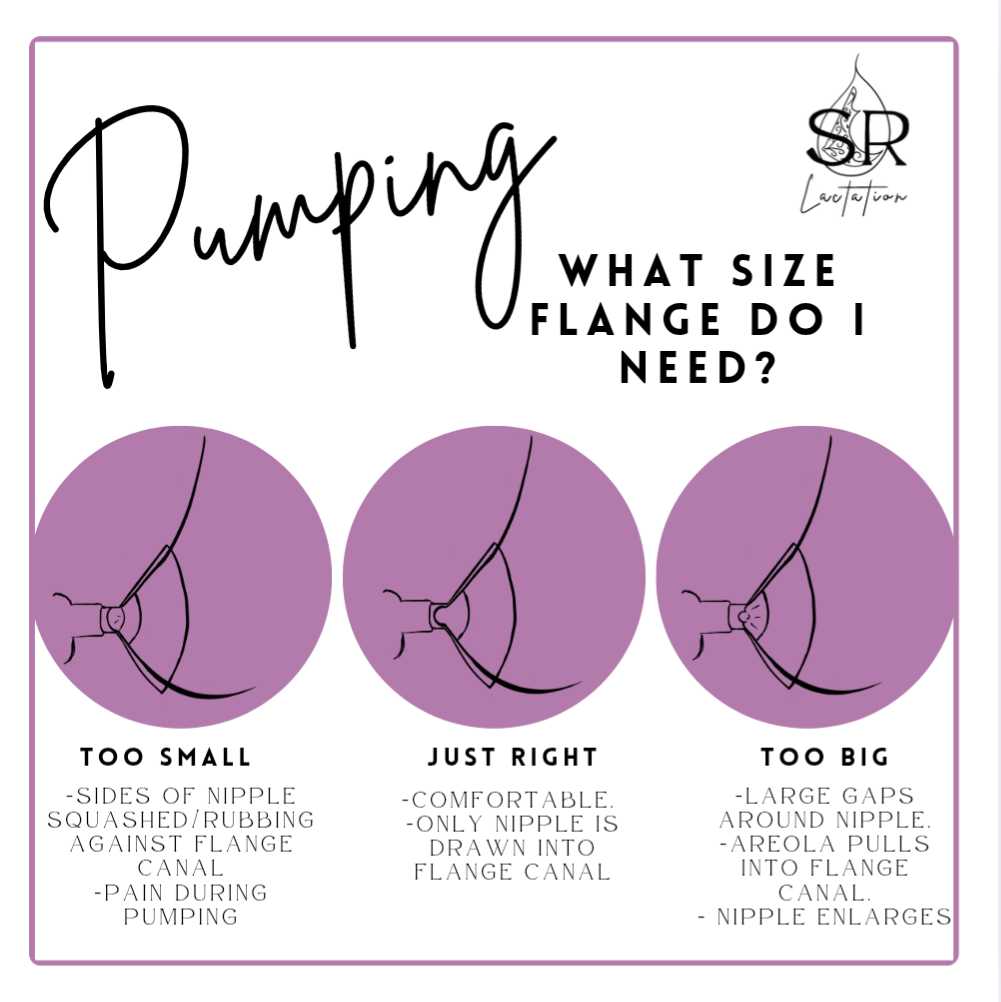
When pumping feels uncomfortable or painful, stress hormones like cortisol can spike, making the experience more challenging and lowering oxytocin levels. Since oxytocin is essential for milk ejection, discomfort during pumping can directly reduce milk output.
Every pumping parent is unique, so individualised support is key. That said, starting with a flange size that closely matches your nipple diameter is often the ultimate place to start. It can lead to shorter, more productive sessions, a stronger milk supply, and a calmer, happier pumping experience.

srlactation@gmail.com
07405921480
©copyright2025 SRLactation
 SR Lactation